
27 November 2026
Announcement: Australia Awards in Indonesia Temporary WhatsApp Service Disruption
Australia Awards in Indonesia would like to inform you that our WhatsApp service is currently experi... Read more

The Australia Awards are prestigious, transformational scholarships and short courses offered to emerging leaders for study, research and professional development in Australia
25 November 2026
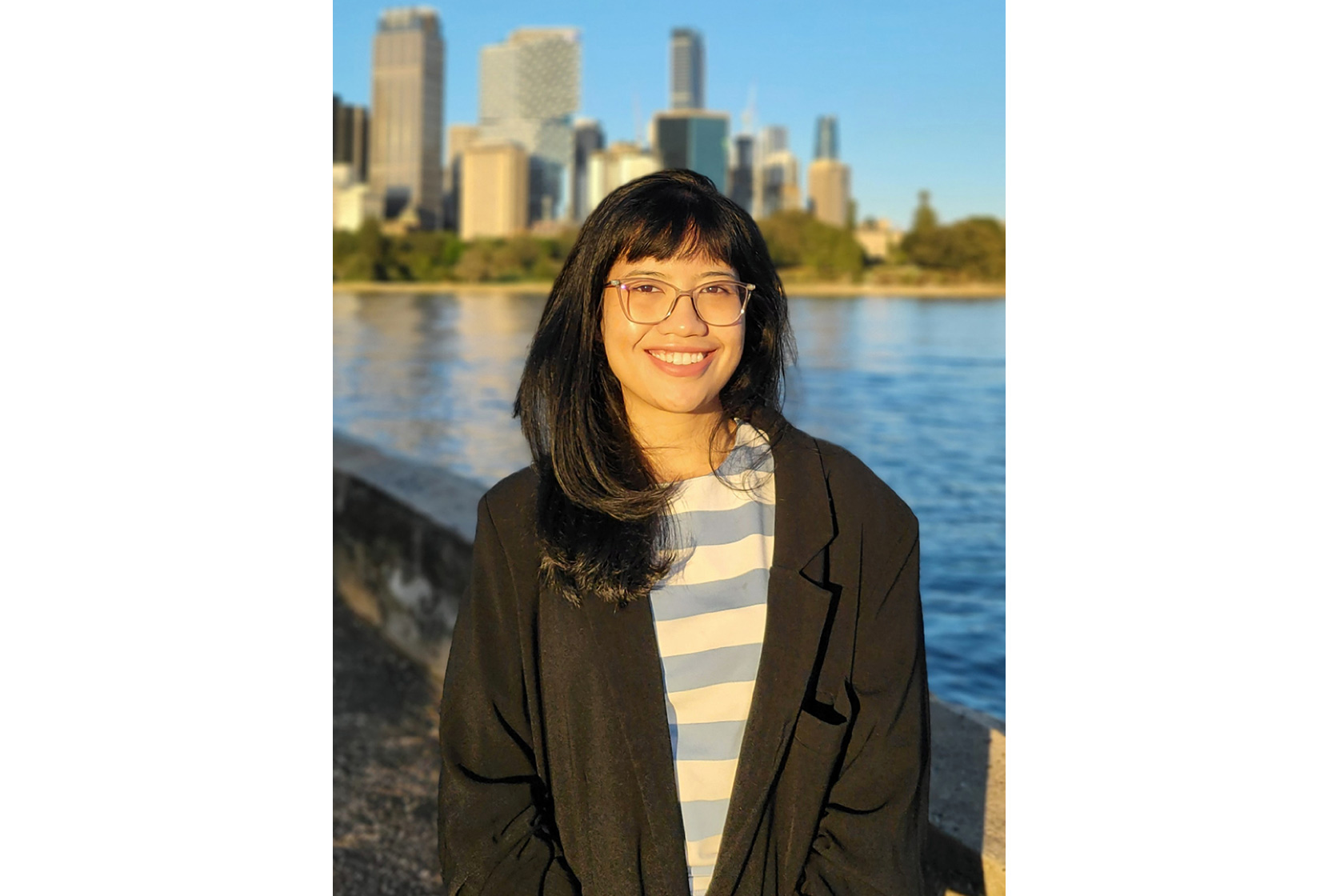
 Shaping Inclusive Policies: Sarah Marchiani’s Commitment to Women’s and Children’s Rights
As a policy analyst in the Legal Affairs and Cooperation Bureau of Indonesia’s Ministry of Women’s Empowerment and Child Protection, Sarah Marchiani works at the intersection of public policy, international cooperation and the advancement of women’s and children’s rights.
Her journey into public policy began with a background in psychology. While working in government, she recognised the need to strengthen her understanding of how regulations are developed, evaluated and translated into meaningful social outcomes.
‘I initially had a psychology background, but my work was focused on policy and regulations. I felt there was a gap in my understanding, especially around creating and evaluating regulations in areas like domestic violence. I wanted to learn how policies are created and implemented effectively,’ she said.
Determined to strengthen her expertise, Sarah pursued further studies in 2021 through an Australia Awards Split-Site Masters Program (SSMP), funded by Bappenas and the Australia Awards in Indonesia. The program combined studies in the Faculty of Sociology at Universitas Gadjah Mada (UGM) with a Masters of Social Policy at The University of Melbourne.
‘Studying social policy has shown me how to develop more inclusive policies, especially for groups that need specific support. It’s essential to design policies that genuinely reflect communities' needs. This program helped me understand not only policy creation but also how to bring a broader societal perspective into it,’ Sarah said.
Gaining a Global Perspective on Policy
For Sarah, studying in Australia was an opportunity to challenge her assumptions and explore public policy from different perspectives. At The University of Melbourne, she examined policy development, evaluation and social inclusion through an interdisciplinary approach.
She particularly valued the discussion-based learning environment, where students from diverse cultural and professional backgrounds exchanged ideas and challenged one another’s perspectives.
‘Studying in Australia showed me the power of inclusive, discussion-based learning. I met students from different countries, and these interactions gave me new perspectives and helped me understand social policy in a more global context,’ she recalled.
Her learning extended beyond the university. While working part-time as a cashier in Melbourne, Sarah experienced Australia’s emphasis on workplace health and safety firsthand. The experience introduced her to a workplace culture that prioritised employee well-being over commercial priorities.
‘One of the key takeaways from my part-time experience was that the company made sure my safety was a top priority. At work, they’d say an employee’s wellbeing matters more than the products on the shelves. I wish this approach to worker safety could be more common in Indonesia,’ Sarah shared.
Turning Learning into Professional Skills
Returning to Indonesia in 2024, Sarah brought home more than academic knowledge. She had developed greater confidence in communicating ideas, engaging with stakeholders and considering how policy decisions affect different groups in society.
‘I’ve learned that effective policy isn’t just about creating regulations. It’s about finding ways to influence people in key positions and aligning policies with social needs,’ she said.
One important lesson was the value of public participation. Sarah recognised that effective policymaking requires more than a top-down approach; it also involves engaging communities, gathering feedback and ensuring that those affected by policies have a voice.
Shortly after returning, Sarah moved to the Legal Affairs and Cooperation Bureau, where she took on responsibilities involving national and international cooperation. The position gave her opportunities to apply her communication, negotiation and relationship-building skills in developing partnerships and agreements.
Building Networks and Advancing Women’s Leadership
Sarah has maintained connections established during her studies. At The University of Melbourne, she worked with Professor Max Holleran, who supervised her group research project on Green Skills and Just Transition.
She was also accepted into the Australia Awards Short Course, ‘Women in Leadership in the Security Sector’ at Deakin University. The short course deepened her understanding of women's leadership in security institutions; an area closely connected to her professional responsibilities. She also worked with Professor Shahram Akbarzadeh, who supervised her short-course project.
‘This short course was timely. At the Ministry, we were already exploring issues around women, peace and security. Through the course, I connected with individuals who are influential in these areas. These networks are key to pushing forward change and we’re already planning joint projects,’ she said.
One initiative focused on raising awareness of women’s leadership in Indonesia’s security sector. Working with her team, Sarah connected with stakeholders, including female military officials, to explore the challenges and opportunities facing women in these positions. The team also produced a video highlighting their experiences and contributions, while encouraging greater recognition of women’s leadership potential.
Bridging International Commitments and Local Priorities
Back at the Ministry, Sarah applied her knowledge and professional skills to several important national and international initiatives.
She coordinated Indonesia’s periodic reports under the Convention on the Elimination of All Forms of Discrimination against Women (CEDAW) and the Convention on the Rights of the Child (CRC), as well as the Government of Indonesia’s report on the Beijing Platform for Action (BPfA), which tracks progress in advancing gender equality. She also contributed to ASEAN reports on women’s and children’s issues.
Her responsibilities extended to supporting Indonesia’s participation in international forums, including the Commission on the Status of Women (CSW), the G20 Empowerment of Women Working Group, the ASEAN Committee on Women and the ASEAN Commission on the Promotion and Protection of the Rights of Women and Children.
These responsibilities required close coordination with a wide range of stakeholders, including government institutions, civil society organisations, academics and private sector representatives. Sarah drew on the analytical and collaborative skills developed during her studies to gather information, assess different perspectives and contribute to discussions on international policy commitments.
‘Working on treaty reporting and participating in international forums have reinforced the importance of bridging international commitments, national policies and the realities experienced by communities,’ Sarah said.
Navigating multilateral negotiations has been one of the more demanding aspects of her work. Countries often hold different positions on women’s and children’s rights, making it challenging to reach consensus on sensitive issues.
‘It can be frustrating when negotiations reach a deadlock. However, we must uphold certain principles, and engaging like-minded countries helps amplify our collective voice. We need to ensure that our national priorities and values are reflected in the documents we endorse,’ she said.
Drawing on her experience in Australia, Sarah has also advocated for greater involvement of civil society organisations (CSOs) in policymaking, recognising the value of perspectives beyond government institutions.
‘I have consistently encouraged dialogue with CSOs, especially in the preparation of Indonesia’s positions and statements for international forums. Their experiences and perspectives provide valuable insights into the realities on the ground,’ she said.
A Commitment to Meaningful Change
Sarah is now considering pursuing a PhD to deepen her expertise and continue contributing to policy development in Indonesia.
Reflecting on her journey, she sees international education as an opportunity not only to acquire knowledge but also to develop the confidence, perspective and connections needed to address complex challenges.
For aspiring scholars, she encourages an open-minded approach to learning and a willingness to engage with people whose experiences and perspectives differ from their own.
‘The Australia Awards Scholarship and Short Course opened doors I hadn’t considered. The experience taught me the importance of collaboration and staying committed to making a positive impact,’ she concluded.


Share this news on:
Related News