
08 October 2026
Join Our Scholarships Information Sessions for Prospective Applicants with Disabilities 2026
Thinking about pursuing a Masters or Doctoral degree in Australia? The Australia Awards Scholarships... Read more

The Australia Awards are prestigious, transformational scholarships and short courses offered to emerging leaders for study, research and professional development in Australia
06 October 2026
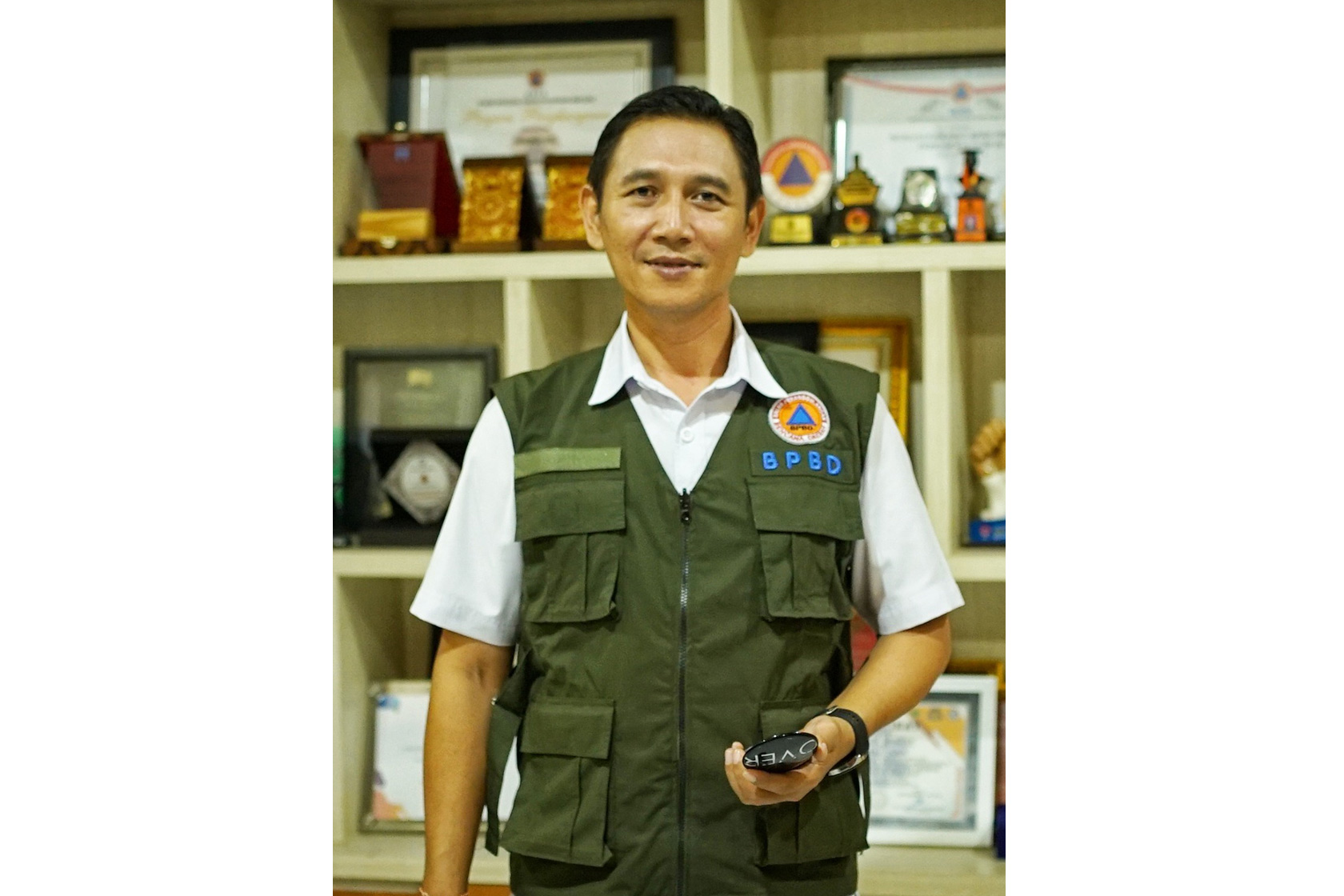
 Building Safer Bali Through Innovation: I Gede Agung Teja Bhusana Yadnya’s Journey in Disaster Risk Management
For more than 18 years, Dr I Gede Agung Teja Bhusana Yadnya, known as Teja, has worked in disaster risk management at Bali Province's Regional Disaster Management Agency (BPBD). Today, he serves as Head of BPBD for the Province of Bali, leading the agency’s efforts to strengthen disaster preparedness and response across the province. His career has been shaped by a simple but pressing question: how can disaster preparedness reach more people and better reflect the needs of the communities it is designed to protect?
In Bali, this question is particularly important. Much of the island's population and economic activity, including its tourism industry, is concentrated along the coastline, where communities and visitors face risks from tsunamis and other natural hazards.
‘Tourism thrives on the coast here in Bali. Our research at BPBD shows that we're in a high-risk zone for tsunamis, increasing the potential for disaster,’ Teja said.
One challenge he identified was the limited reach of existing tsunami warning infrastructure.
‘Currently, less than 5% of Bali's 180,000 residents receive early tsunami warnings. This doesn't even account for tourists. That's why I was motivated to design a more accessible warning system to reach more people,’ he added.
Turning an Award Project into an Early Warning System
In 2022, Teja participated in the Australia Awards Short Course on Mainstreaming Disaster Risk Management at Griffith University. The program allowed him to examine disaster management through a broader lens and consider how international knowledge could be adapted to Bali’s local context.
As part of his Award Project, he developed the Bali Tsunami Early Warning System (BTEWS), drawing on the challenges he had observed in existing warning infrastructure.
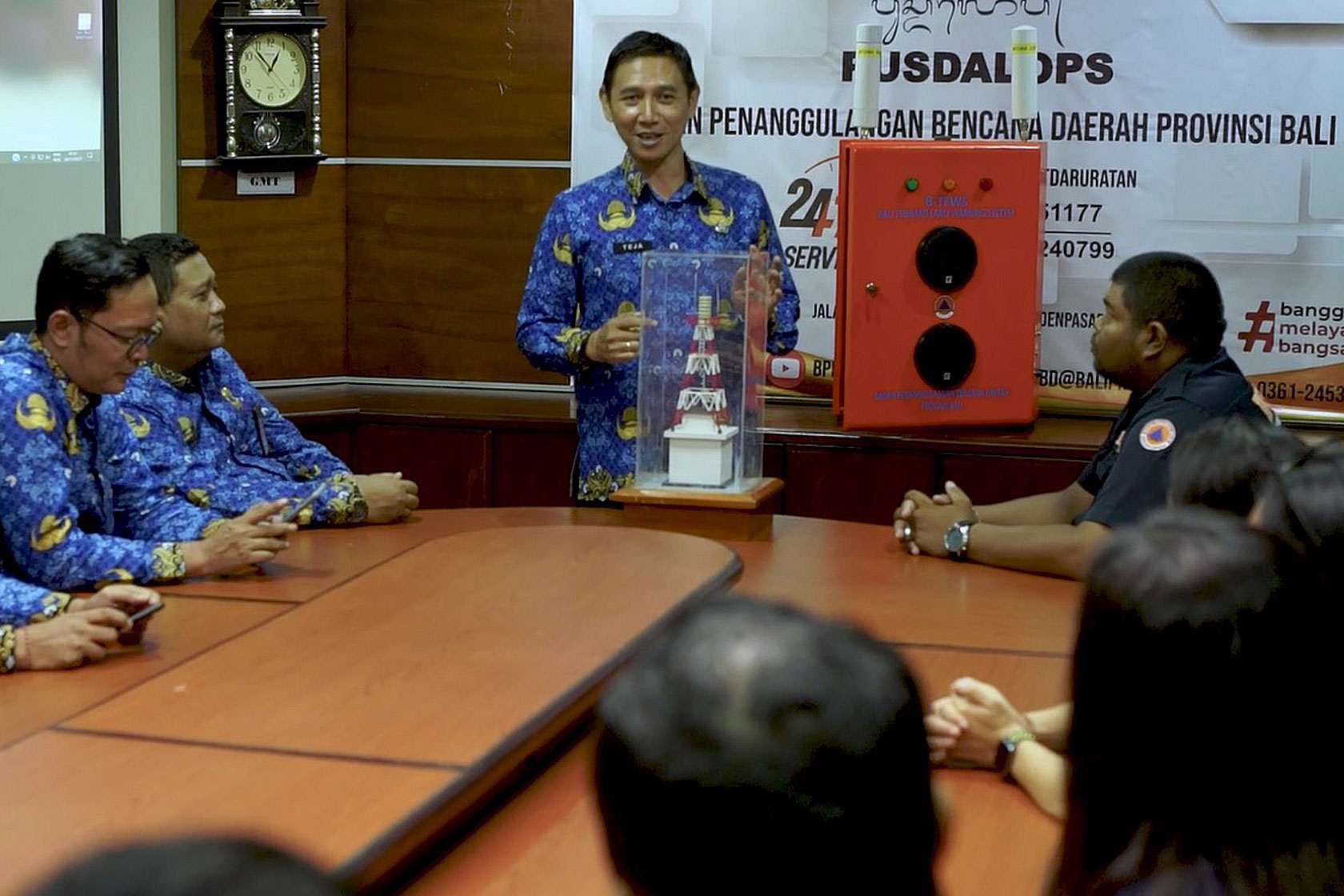
BTEWS combines digital radio and Global System for Mobiles Communications (GSM) technology to transmit warnings through siren devices that can be adapted to different locations and needs. The system can be installed as either portable devices or towers, providing greater flexibility for communities and organisations.
A portable BTEWS unit can be built for approximately Rp50 million, making it more affordable than previous technologies.
‘We've managed to cut costs significantly. A BTEWS unit is not only cheaper and easier to use but also versatile, suitable for various sectors across Bali,’ Teja explained.
For Teja, innovation is not simply about introducing new technology. It is about finding practical solutions to real problems and ensuring that those solutions can be used by the people who need them.
He also recognised that effective disaster preparedness requires collaboration across sectors.
‘Every sector in Bali, especially the private sector, should be involved in disaster preparedness. It's not just the government's responsibility,’ he said.
BTEWS has since been installed at sites across Bali, including locations where older tsunami warning towers could no longer operate due to discontinued replacement parts. Organisations including the State Electricity Company (PLN) and the Indonesian Red Cross Society (PMI) have also independently purchased and implemented BTEWS.
Teja has applied the same approach to flood preparedness through the Bali Flood Early Warning System (B-FEWS), which connects water-level monitoring with warnings for residents in flood-prone areas.
Together, these initiatives demonstrate how Teja has translated technical challenges into practical solutions designed around the needs of communities.
Recognition for Public Service Innovation
Teja's work in disaster preparedness has received recognition from the Bali Provincial Government over several years.
In 2022, he was awarded first place among the Bali Provincial Government's Outstanding Civil Servants. He subsequently received an Extraordinary Promotion in 2024 and the Bali Swacitta Nugraha Award in 2026 for public service innovation.
His work on BTEWS has also created opportunities to share his experience internationally.
With support from Griffith University Professor Cheryl Desha, Teja submitted the BTEWS project to the 13th International Symposium on Digital Earth at Harokopio University in Athens, Greece, in 2023.
His proposal was selected for presentation, but attending the symposium presented a practical challenge: he would have needed to cover his own travel expenses.
‘At that time, I was looking for funds to support my expenses but didn't have any luck,’ he recalled.
Professor Desha, whose own proposal had also been selected for the symposium, offered to present the project on his behalf. Teja joined the session remotely and answered questions following her presentation.
The experience reflected another important aspect of his journey: working across professional and cultural contexts to share knowledge and strengthen ideas through collaboration.
Applying Lessons from Australia to Inclusive Preparedness
The development of BTEWS was not without challenges. Teja recalled that the idea initially received some scepticism, particularly regarding the role of the private sector in disaster preparedness.
‘My mentors were doubtful at first. I assume the reason is that collaboration with the private sector was not common in many countries, including Australia, while tsunami early warning was completely served by the national government,’ Teja recalled.
Rather than abandoning the idea, he continued to discuss and refine the project. Professor Desha subsequently recognised its potential and provided feedback on how to strengthen it.
One important lesson was the need to incorporate Gender Equality, Disability and Social Inclusion (GEDSI) into local disaster preparedness.
Teja brought this perspective back to Bali and applied it to the Disaster Preparedness Certification (Sertifikasi Kesiapsiagaan Bencana) program for the tourism sector.
He reviewed the certification guidelines and reduced the number of indicators from 54 to 31, while incorporating GEDSI and climate change considerations. The revised criteria were designed to make the certification process more practical while ensuring that hotels considered the needs of different groups when preparing for disasters.
The program has continued to expand, with 117 hotels now certified.
‘The tourism and hospitality sector, such as hotels, stands to gain from this certification. It not only ensures a safe environment for tourists but also makes them a preferred choice for government events,’ Teja noted.
Designing Preparedness Around People
For Teja, effective disaster preparedness ultimately depends on understanding that people experience emergencies differently.
People with disabilities, children and older people may require different forms of warning or additional assistance during an evacuation. Tourists may face other challenges, including language barriers and unfamiliarity with local evacuation routes.
Considering these differences means looking beyond whether a warning system technically works. Warning messages, evacuation procedures and disaster drills must also consider whether people can understand the information, access it and act on it when an emergency occurs.
This people-centred approach has become part of Teja’s broader work in building disaster resilience. It reflects his belief that technical innovation should go hand in hand with empathy, collaboration and an understanding of different needs.
His experience also demonstrates how learning can continue beyond the classroom. The knowledge, perspectives and relationships developed through his Australia Awards experience have informed changes to disaster preparedness in Bali, from warning technology to tourism certification.
For Teja, building resilience requires collective action. ‘Disaster resilience cannot be built by the government alone. Everyone has a role, starting from individuals and families, then communities, businesses and other institutions. Even a small action can contribute to making Bali safer and better prepared for everyone,’ Teja said.
His journey from identifying a gap in Bali’s warning infrastructure to developing and implementing new systems illustrates how local challenges can become opportunities for innovation. By combining technical knowledge with collaboration and a focus on inclusion, Teja continues to turn ideas into practical solutions that can benefit communities across Bali.


Share this news on:
Related News